%2Fandroid-chrome-192x192.png&w=3840&q=75)
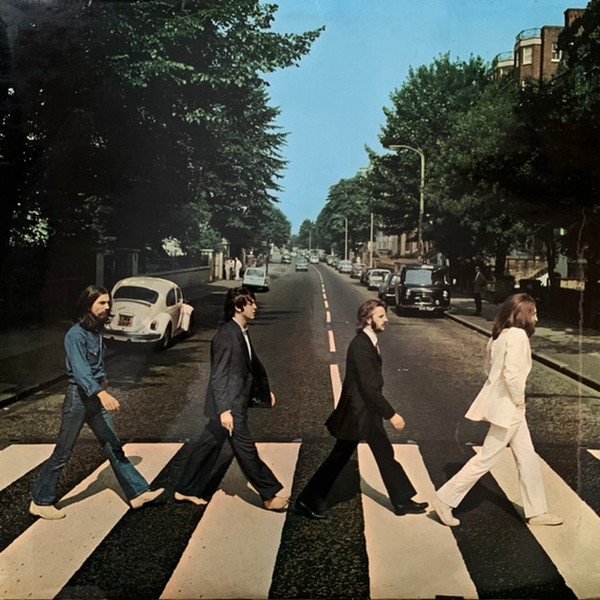
Best Abbey Road Vinyl Pressing: UK -2/-1 vs 2019 Remix, Pro-Use and MFSL
The Beatles’ Abbey Road has been pressed on vinyl for more than half a century, but choosing the right copy is not as simple as buying the oldest or most expensive version.
Collectors compare early UK pressings, later analogue cuts, Japanese audiophile editions, Mobile Fidelity’s half-speed release, the digitally sourced 2012 LP and Giles Martin’s 2019 anniversary remix. Some use the original 1969 stereo mix; the 2019 edition does not.
Quick verdict
- Best original-mix pressing: Clean UK copy with
YEX 749-2 / YEX 750-1matrices - Best-value original-mix option: Later analogue UK pressing
- Best modern edition: 2019 Giles Martin remix
- Best quiet vintage alternative: Japanese Toshiba Pro-Use
EALF-97001 - Most disputed audiophile edition: Mobile Fidelity
MFSL 1-023 - Best for bonus material: 2019 three-LP anniversary set
Based on the available comparisons, the early UK -2/-1 cut has the strongest overall support. Reviews from Analog Planet, My Vinyl Review and Vinyl Reviews all use an early UK copy as a reference and prefer it to at least one later edition.
For buyers who want a clean, easily obtainable copy rather than the original 1969 mix, the 2019 remix is the strongest modern choice. It offers a different balance, with more prominent low frequencies and clearer organization, but it should not be described as a simple remaster.
First decide: original mix or 2019 remix?
This is the most important question in the entire comparison.
Most vintage pressings and the 2012 LP use the original stereo mix. The 2019 anniversary edition contains a new stereo mix created by Giles Martin and Sam Okell from the original eight-track session tapes, using George Martin’s 1969 mix as their guide. Abbey Road’s official anniversary material presents it as a fresh interpretation rather than a restoration of the old stereo master.
That means a buyer comparing an original UK copy with the 2019 LP is not only comparing pressing quality. They are also comparing two different mixes.
Reports generally associate the original mix with greater immediacy and historical character. Reviews of the 2019 remix more often praise its low-frequency weight, vocal separation and ability to reveal individual parts.
Neither preference is inherently more correct. Someone who wants the album as it was originally issued should begin with an original-mix pressing. Someone who wants a clean modern presentation may reasonably prefer the remix.
Early UK YEX 749-2 / YEX 750-1: the benchmark
Among original-mix editions, the UK -2/-1 cut receives the most consistent support.
In Analog Planet’s large 2012 comparison, Michael Fremer uses an early UK copy as the main reference against later UK, US, Japanese, Mobile Fidelity and 2012 editions. His comparison favours the UK pressing for its presence, transparency, transient response and spatial information.
My Vinyl Review compares an early UK -2/-1 pressing with a later UK Blue Box-era copy and the 2009 CD. The early pressing is preferred for its fuller presentation and stronger bass, while the later UK copy is described as smoother but less revealing.
Vinyl Reviews also places an original UK copy well ahead of the 2012 German pressing. Dennis Davis’ comparison focuses on rhythmic drive, vocal body and guitar texture, giving the newer pressing only three out of five for sound.
Collector discussions broadly support those professional-style comparisons. In an AudioKarma thread about which pressing to buy, several participants favour the UK -2/-1 over the MFSL and other alternatives. A StereoNET discussion also places early UK copies near the top, although participants do not agree completely on one universal winner.
Based on this combination of reviews and owner reports, the UK -2/-1 is the strongest evidence-based recommendation for the original mix.
That still does not mean every copy will perform equally. Surface condition, previous use and manufacturing variation remain important, particularly during the album’s quieter passages.
How to identify the recommended UK cut
Collectors commonly identify the desired cut through its runout information:
- Side one:
YEX 749-2 - Side two:
YEX 750-1 - UK catalogue number:
PCS 7088
The sleeve can provide additional clues. Early copies may have a misaligned Apple image on the rear cover, a black inner sleeve or particular label variations. Those details can matter to collectors, but they do not replace checking the matrices.
Forum discussions indicate that the same -2/-1 cut can appear with more than one sleeve or label variation. Some Australian and New Zealand copies are also reported to use UK metalwork carrying those matrices.
The practical advice is therefore:
Pay for the cut and condition before paying for a rare sleeve variation.
A later-looking copy with the correct matrices may offer the sound a buyer wants without the premium attached to a strictly defined first package.
Later UK pressings: the value option
A later analogue UK pressing may be the most sensible purchase for someone who wants the original mix but does not want to chase an expensive first issue.
My Vinyl Review’s later UK copy does not equal its early pressing for detail or low-frequency authority, but it is still described as smooth and musically satisfying. Analog Planet also finds that a somewhat later UK pressing comes close to its first copy in the 2019 remix comparison.
SoundStage! Ultra recommends searching for UK vinyl produced before the catalogue moved to digitally sourced cutting. Its own older UK copy is preferred to the anniversary remix for attack and excitement, even though the remix receives praise for fullness and separation.
The difficulty is that “later UK pressing” includes several different cuts. Buyers should still inspect the matrices instead of assuming that every UK copy from the 1970s or 1980s is equivalent.
The best-value recommendation is therefore conditional:
Look for a clean analogue-era UK copy with clearly documented runouts, rather than buying only by year or label colour.
Australian and New Zealand UK-metal copies
StereoNET participants report that some early Australian and New Zealand copies use UK metalwork carrying YEX 749-2 / YEX 750-1. Owners of those specific variants often describe them favourably alongside UK originals.
This creates a possible value opportunity, particularly outside Britain. However, country alone is not enough. The recommendation applies only when the matrices confirm the relevant cut.
These editions are best treated as knowledgeable-buyer alternatives rather than guaranteed substitutes for the UK original.
Japanese Toshiba Pro-Use EALF-97001
The Japanese Toshiba Pro-Use pressing is one of the strongest vintage alternatives, especially for buyers who prioritize quiet surfaces and precise detail.
Analog Planet reports exceptionally quiet vinyl and sharply defined transients, but finds its overall presentation more restrained and mechanical than the early UK pressing. That makes the comparison less about simple quality and more about preference.
An Audiogon discussion of Beatles pressings includes strong praise for Japanese EMI-Odeon releases and specifically identifies the Pro-Use Abbey Road as an excellent edition. Other participants note that Japanese copies can sound somewhat bright despite their manufacturing quality.
StereoNET owners also respond positively to the Pro-Use, but several who compared it with a UK -2/-1 still favour the UK pressing for a more natural and involving balance.
Based on those reports, the Pro-Use is a strong choice for collectors who value surface quietness, definition and premium Japanese production. It is not clearly superior to the UK cut.
Why Mobile Fidelity divides listeners
Mobile Fidelity’s half-speed mastered MFSL 1-023 has dedicated supporters, but the evidence is too divided for it to be the default audiophile recommendation.
Some AudioKarma and Audiogon participants enjoy its quiet surfaces, prominent bass and high-frequency detail. On a system that sounds restrained or midrange-heavy, that balance may be appealing.
Other comparisons are much less positive.
Analog Planet describes the MFSL as emphasizing the top and bottom at the expense of the middle frequencies. My Vinyl Review excludes it from the main comparison because the writer considers its bass balance excessive. Several AudioKarma participants who compared it directly with the early UK pressing still place the UK version ahead.
The most responsible conclusion is that the MFSL is system-dependent. It may suit a particular setup or listener preference, but its collector status should not be mistaken for universal agreement about its sound.
The disputed 2012 Sean Magee pressing
The 2012 stereo vinyl uses the original stereo mix but was cut through a digital workflow.
In The Audiophile Man’s account, Sean Magee explains that the vinyl masters came from 24-bit/44.1kHz files and did not receive the compression used for the CD releases.
The listening reports disagree sharply.
The Audiophile Man prefers the 2012 pressing to a 1978 comparison copy, particularly during “Here Comes the Sun,” where the writer hears clearer placement, texture and separation.
Analog Planet considers the 2012 LP reasonably successful and credits it with preserved dynamics, especially on side two. However, it is still judged flatter and less immediate than the early UK reference.
Vinyl Reviews is more negative, finding reduced bass drive, vocal depth and instrumental texture compared with the original UK copy.
The 2012 edition should therefore be presented as genuinely disputed. It is neither an automatic failure because it came from digital files nor a proven replacement for a strong analogue pressing.
The 2019 Giles Martin remix
The 2019 remix is the best modern option in this comparison.
Analog Planet’s full anniversary review praises its stronger low end and more orderly placement of voices and instruments. The review still prefers aspects of the early UK pressing and concludes that the two versions offer different strengths.
SoundStage! Ultra similarly reports fuller harmonies and clearer layering in the remix, while favouring older UK and Japanese vinyl for sharper attack and greater excitement.
The Broken Record offers a strongly negative minority view, preferring an original US Apple copy and a mid-1970s Capitol pressing. That conclusion conflicts directly with Analog Planet, which considers the US originals it tested much weaker than the UK pressing.
The disagreement does not undermine the 2019 edition’s value. It shows that a cleaner, fuller modern remix will not necessarily satisfy someone seeking the balance and energy of the original stereo presentation.
Buy the 2019 LP when:
- you want a clean new copy,
- stronger bass is appealing,
- you value clear separation,
- and you are comfortable with a new stereo mix.
Standard 2019 LP or three-LP set?
The standard 2019 LP contains the Giles Martin remix.
The three-LP anniversary package adds two records of session material and demos. The official anniversary announcement states that the expanded editions contain 23 session recordings and demos, most previously unreleased.
The three-LP set is therefore the better purchase for Beatles fans interested in the recording process. It should not be ranked separately as a superior pressing of the main album, because its first disc uses the same remix.
Why reports on US pressings conflict
US pressings produce some of the sharpest disagreement in the evidence.
The Broken Record strongly prefers an original US Apple pressing to the 2019 remix and also responds positively to a 1970s Capitol copy. SoundStage! Ultra finds its mid-1970s US pressing compressed compared with UK and Japanese editions, but still exciting.
Analog Planet reaches the opposite conclusion after testing several original US copies, placing them well below the early UK pressing.
The evidence is too inconsistent to recommend or reject all US copies as a group. Different cuts, pressing plants, copy condition and playback systems may all contribute.
The useful conclusion is not “US pressings are bad.” It is:
Do not pay a premium for a US copy without identifying the exact pressing and understanding that reports vary widely.
What reviewers compare on key tracks
These are the details reviewers tend to use when comparing editions.
“Come Together”
Reviewers often focus on bass weight, drum impact and whether the mix remains controlled as the arrangement develops. The 2019 remix is frequently associated with stronger low frequencies, while some older-pressing advocates prefer the original mix’s drive.
“Here Comes the Sun”
The Audiophile Man uses this track to support the 2012 pressing, emphasizing separation and the placement of individual instruments. Other reviewers use it to compare guitar texture, tonal warmth and the smoothness of the vocal arrangement.
The side-two medley
Collector reports commonly focus on continuity, quiet-surface performance and whether each section retains momentum without becoming crowded. This is also where noise on a worn vintage copy can become especially distracting.
What three Analoq listeners noticed
Analoq currently has only three relevant entries, so they are a useful glimpse rather than a definitive community verdict.
One listener with a UK Apple PCS 7088 copy describes the album as warm and highly finished, while preferring the second side and George Harrison’s songs to parts of side one.
Another listener emphasizes the impact of the rhythm section, the atmosphere of the side-two medley and the challenge of finding a clean UK copy at a reasonable total cost. That listener considers the 2019 edition acceptable for a casual setup.
A third entry suggests that later UK analogue pressings can also be excellent and more affordable.
These reports support the broader buying categories but do not determine the final ranking.
Best Abbey Road pressing by priority
Best original-mix choice
A clean UK copy with YEX 749-2 / YEX 750-1 matrices has the strongest support across detailed comparisons and collector reports.
Best-value original mix
A later analogue UK pressing may provide most of the appeal for less money. Check the runouts because “later UK” covers several cuts.
Best modern edition
The 2019 Giles Martin remix is the easiest modern recommendation. It is clean, available and widely praised, but it is a new mix.
Best quiet vintage alternative
The Japanese Toshiba Pro-Use EALF-97001 is the strongest candidate for buyers who value silent surfaces and precise detail.
Best for bonus material
The 2019 three-LP set adds extensive sessions and demos while retaining the standard remix on its first disc.
Final verdict
Based on the available comparisons, a clean UK pressing with YEX 749-2 / YEX 750-1 matrices is the strongest original-mix edition of Abbey Road.
That verdict reflects repeated support from Analog Planet, My Vinyl Review, Vinyl Reviews and substantial collector discussions. It does not mean that every first-edition package sounds identical or that buyers should ignore condition.
For better value, a later analogue UK pressing is the most practical vintage alternative. Buyers should prioritize documented matrices and record condition over sleeve rarity.
The 2019 Giles Martin remix is the best modern purchase, particularly for listeners who want a clean new record with stronger bass and clearer separation. It should be chosen with the understanding that it changes the stereo presentation.
The Japanese Pro-Use offers a compelling quiet-vinyl alternative, while the MFSL and 2012 Sean Magee pressing remain too disputed for universal recommendations.
In practical terms:
- Choose the UK
-2/-1for the strongest original-mix evidence. - Choose a later UK pressing for value.
- Choose the 2019 remix for modern clarity and availability.
- Choose the Pro-Use for surface quietness and precision.
- Choose the three-LP anniversary set for sessions and outtakes.
Sources and further reading
- Analog Planet — Abbey Roadblock
- Analog Planet — Abbey Road 50th Anniversary Remix Full Review
- My Vinyl Review — First Listen: The Beatles Remastered Compact Discs
- Vinyl Reviews — Abbey Road
- The Audiophile Man — Stereo Beatles Vinyl
- SoundStage! Ultra — The Beatles: Abbey Road Anniversary Edition
- The Broken Record — Abbey Road 50th Anniversary Reissue
- AudioKarma — Abbey Road: What Pressing to Look For?
- StereoNET — Favourite Beatles Abbey Road Pressing
- Audiogon — Beatles Vinyl LPs Discussion
- Abbey Road — Giles Martin on Remixing Abbey Road
- Abbey Road — The Beatles Revisit Abbey Road with Anniversary Releases