%2Fandroid-chrome-192x192.png&w=3840&q=75)
Best Appetite for Destruction Vinyl Pressing: Original 1987 vs 2008 and 2018 Remaster
Guns N’ Roses’ Appetite for Destruction has appeared on vinyl in several very different forms.
Collectors can choose between original 1987 pressings mastered by George Marino at Sterling Sound, the collectable Robert Williams sleeve, the 2008 Back to Black reissue, the 2018 remastered double LP and large anniversary packages containing demos and unreleased recordings.
These editions are often discussed as though there is one obvious winner. The available evidence is more complicated.
Strong original copies receive the most consistent praise for energy, attack and natural guitar character. The 2018 double LP offers greater clarity, heavier bass and a more spacious three-side layout, but some listeners consider it louder and less dynamic. The 2008 edition attracts both praise and criticism, while the original Robert Williams cover is more clearly a collector feature than proof of superior mastering.
Quick verdict
- Best-supported sound-quality option: Clean 1987 George Marino/Sterling Sound pressing
- Best modern album edition: 2018 remastered double LP
- Best for demos and archive material: 2018 Super Deluxe package
- Best collector edition: 1987 pressing with the original Robert Williams sleeve
- Most disputed modern reissue: 2008 Back to Black Willem Makkee/
320pressing - Unsupported pressing claim: A special Robert Ludwig or
RLoriginal
A clean 1987 original remains the strongest sound-quality recommendation. The Skeptical Audiophile praises a selected vintage Geffen pressing for its bass, attack, natural midrange, energy and ability to give the dense guitars space.
The 2018 double LP is the strongest modern package. Reviews from Louder Than War, MisplacedStraws and Long Live Vinyl praise its clarity, stronger weight and presentation. Collector discussions remain divided over its loudness, dynamics and GZ pressing quality.
Why identifying the original pressing is difficult
The original vinyl was mastered by George Marino at Sterling Sound.
That credit matters because some current online guides incorrectly describe the definitive original as a Robert Ludwig or RL pressing. The release information does not support that claim, so do not search for RL in the deadwax. The more reliable starting points are:
- an original 1987 Geffen release
- George Marino/Sterling mastering identification
- correct catalogue and runout information
- careful evaluation of the record’s physical condition
No single US or European matrix combination defeats every other original.
Different plants may have produced records from different metalwork, and even records sharing similar packaging may not perform identically. The most responsible recommendation is for a clean original-era George Marino/Sterling pressing, not one supposedly magical matrix that the sources do not establish.
Original 1987 George Marino/Sterling pressings
Strong vintage pressings receive the broadest support for preserving the album’s original force.
The Skeptical Audiophile describes its selected Geffen copy as having substantial but controlled bass, clear attacks, natural midrange and enough separation for the two guitars to remain distinct. The pressing is praised for presenting the record with both energy and space. (ontherecord.co)
The Vinyl Countdown reaches a simpler but compatible conclusion. The writer finds that a 2008 heavyweight reissue lacks the character of an original 1980s copy.
A Steve Hoffman Music Forums discussion similarly favours early originals for their gritty punch and raw energy.
These sources support the original as the sound-quality starting point, but they do not prove that every original copy is excellent.
What a strong original reportedly does well
- preserves the guitars’ rough texture
- retains strong attack and dynamic contrast
- gives the bass weight without overwhelming the mix
- keeps vocals and guitars present without excessive smoothness
- communicates the album’s uncontrolled energy
Main risks
Original copies are now several decades old. Condition may influence the experience as much as the mastering.
A desirable copy can still suffer from:
- groove wear
- repeated-play damage
- inner-groove distortion
- scratches and surface noise
- poor storage
- an inaccurate or incomplete seller description
The recommendation is therefore for a clean and properly identified original, not the first inexpensive 1987 copy available.
Does the Robert Williams cover mean better sound?
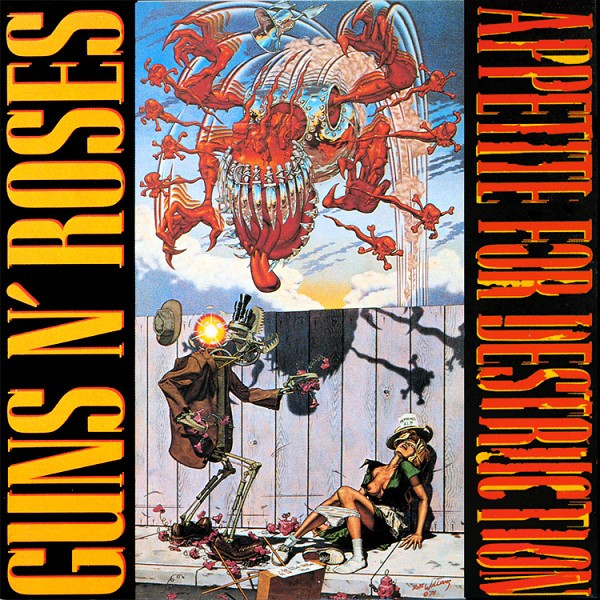
The original sleeve used Robert Williams’ controversial artwork before the cross-and-skulls design became the familiar standard cover.
Copies with the original artwork are now collectable because of their release history and relative scarcity. They can command more attention and higher prices than records using the later cover.
However, the available sources do not show that the sleeve identifies a uniquely superior mastering.
The artwork can help identify an early package, but it does not establish:
- one exclusive matrix
- one superior pressing plant
- better vinyl quality
- or better sound than every skull-cover original
A Robert Williams sleeve is therefore the collector recommendation, not automatically the audiophile recommendation.
Buy it for:
- first-edition appeal
- historical interest
- the artwork variation
- collection value
Do not pay a large sound-quality premium based only on the cover.
US versus European originals
The available credits connect both US and European original releases with George Marino and Sterling Sound, but they do not prove that every pressing used identical metalwork.
This makes a simple US-versus-Europe ranking unsafe.
Strong original-era copies from either market deserve consideration. What does not hold up is the claim that:
- every US pressing beats every European pressing
- every European copy uses the same cut
- or the cover design alone reveals the mastering
Buyers should prioritize:
- verifiable runout information
- clean condition
- trustworthy grading
- return options
- confirmed release identity
Nationality alone is not enough.
2008 Back to Black reissue
The 2008 Back to Black pressing is one of the most disputed editions.
Some documented European copies are associated with Willem Makkee and 320-style runout markings. Buyers should identify the precise cut through the deadwax rather than assuming every 2008 record is the same edition.
Positive reports
A StereoNET discussion includes listeners who praise the Makkee/320 version for its impact and consider it a strong modern pressing.
For these owners, the reissue offers a cleaner copy and a forceful presentation without the condition risks attached to vintage vinyl.
Negative reports
The Vinyl Countdown finds its heavyweight reissue less engaging than an original copy. The stored Steve Hoffman summary similarly describes the Back to Black presentation as smoother and cleaner but less exciting.
Other collector comments characterize some Back to Black copies as flat or CD-like compared with vintage pressings.
Working conclusion
The 2008 edition is not a safe universal winner.
It may suit someone who wants:
- a modern single-LP copy
- a cleaner physical record
- a smoother presentation
- the specific Willem Makkee/
320cut
It may disappoint someone seeking:
- the original’s raw guitar character
- greater dynamic excitement
- a more aggressive and immediate presentation
Exact deadwax identification matters because “2008 Back to Black” can be too broad a description.
2018 remastered double LP
The 2018 release was the album’s first official remaster.
According to the official Interscope product information, the original analogue tapes were transferred and remastered at 192kHz/24-bit resolution. The vinyl was then cut from that high-resolution remastered audio.
This means the edition should not be described as fully analogue or AAA.
The correct description is:
Remastered from high-resolution transfers of the original analogue tapes.
The original album is spread across the first three sides. Side four contains a hologram rather than additional music.
What positive reviews hear
Louder Than War says the remaster makes the playing of the individual band members easier to distinguish.
MisplacedStraws considers the double LP cleaner and more powerful while still retaining the rough character of the original mix.
Long Live Vinyl treats the standard two-LP version as an appealing way to obtain the remastered album without purchasing the far more expensive collector sets.
A stored Record Collector summary also describes the remaster as heavier and more detailed.
What critical listeners hear
The detailed mygnrforum comparison shows why the remaster remains controversial.
Positive listeners hear:
- stronger bass
- clearer cymbals
- greater detail
- easier separation of instruments
- a fuller and more direct sound
Critical listeners hear:
- increased loudness
- reduced dynamic contrast
- occasional shrillness
- a hotter presentation
- less of the guitars’ raw character
A stored Steve Hoffman summary reports the same divide between improved clarity and loss of the dangerous original feel.
Why three sides matter
Spreading the album across three sides reduces the amount of music placed on each playable side.
The sources do not provide a controlled technical test proving that the layout alone makes the 2018 edition better. However, it gives the mastering and cutting engineers more physical space than a tightly packed single-disc edition.
The three-side arrangement is one practical advantage of the 2018 set, even though some collectors dislike having to change sides more frequently.
GZ pressing-quality reports
The 2018 vinyl was pressed by GZ Media, and owner experiences vary.
In the Steve Hoffman GZ discussion, some buyers report clean, enjoyable copies with no major problems.
Others report:
- surface noise
- clicks and pops
- visible defects
- inconsistent quality
- disappointing dynamics
The evidence does not justify saying that every copy is defective.
It does justify advising buyers to:
- purchase from a retailer with a sensible return policy
- inspect the records immediately
- exchange obviously noisy or damaged copies
- avoid treating one defective record as proof that every pressing is identical
The mastering disagreement and the manufacturing disagreement should also remain separate. A physically quiet copy may still sound too loud for one listener, while a listener who likes the remaster may still receive a defective pressing.
Standard 2018 double LP versus Super Deluxe editions
The regular double LP contains the remastered album only.
It does not include the complete Sound City session material. Side four is used for the hologram.
The larger Super Deluxe and Locked N’ Loaded packages contain the archival material that attracted many reviewers.
2 Loud 2 Old Music identifies the 1986 Sound City sessions as the major attraction of the expanded set. The early performances show that the band already had many arrangements close to their finished form.
Long Live Vinyl reaches a similar conclusion, while warning that the largest packages mainly suit dedicated fans because of their cost.
Buy the regular 2LP for
- the remastered album
- stronger bass and clarity
- the three-side layout
- a modern vinyl copy
Buy the Super Deluxe set for
- Sound City sessions
- demos and alternate material
- archival interest
- a more complete history of the album’s development
Do not buy the standard two-LP edition expecting the demos.
What collector discussions disagree about
The collector debates concentrate on three issues.
1. Rawness versus clarity
Original supporters value the guitars’ rough character, dynamic punch and unpredictable energy.
Remaster supporters value improved separation, stronger bass and easier access to details.
2. Smoothness versus excitement
The 2008 Back to Black pressing is described by some owners as forceful and enjoyable. Others find it too smooth or lifeless compared with original copies.
3. Mastering versus manufacturing
Some complaints about the 2018 edition concern loudness and reduced dynamics. Others concern surface noise and physical defects.
Those are different problems and should not be combined into one blanket judgment.
What reviewers focus on in the music
These observations come from the reviewed pressings rather than an Analoq listening test.
“Welcome to the Jungle” is frequently used to discuss the album’s opening impact, guitar separation and the way the remaster reveals individual performances.
“Sweet Child O’ Mine” exposes the relationship between Slash’s lead guitar, Izzy Stradlin’s rhythm work and the strength of the vocal presentation.
“Rocket Queen” is important because it closes a long single-LP side on many editions. It also demonstrates whether a pressing can retain scale and structure through the album’s final extended track.
The album’s dense guitars make it especially sensitive to mastering choices. More clarity can make the two guitar parts easier to follow, while extra loudness or upper-frequency energy can make the same presentation feel aggressive or tiring.
Best edition by buyer priority
Best-supported sound-quality option
Clean 1987 George Marino/Sterling Sound pressing
Choose it for raw guitar character, attack, dynamics and original-era presentation.
Best modern album edition
2018 remastered double LP
Choose it for stronger bass, clearer separation and the three-side album layout. Check the physical copy carefully.
Best bonus-material edition
2018 Super Deluxe package
Choose it for the Sound City sessions, demos and archival material.
Best collector edition
1987 pressing with the Robert Williams sleeve
Choose it for historical and visual collectability, not proven sonic superiority.
Most disputed modern reissue
2008 Back to Black Willem Makkee/320 pressing
Choose it only after confirming the exact cut and understanding that owner reactions differ.
Final verdict
Based on the available reviews and collector discussions, a clean 1987 pressing mastered by George Marino at Sterling Sound has the strongest support as the best-sounding vinyl version of Appetite for Destruction.
Strong originals are praised for bass, attack, natural midrange, dynamic energy and the ability to keep the dense twin-guitar arrangement clear without making it too polished.
The 2018 remastered double LP is the best modern edition. It offers stronger bass, clearer instrument separation and a three-side layout. Its trade-offs are increased loudness, disputed dynamics and variable GZ pressing quality.
The 2008 Back to Black edition remains system- and preference-dependent. Some owners value its impact and clean presentation, while others find it less exciting than an original.
The Robert Williams cover is the collector choice, not proof of a better mastering.
In practical terms:
- Choose a clean 1987 original for rawness, dynamics and original character.
- Choose the 2018 double LP for clarity, bass and modern availability.
- Choose the Super Deluxe edition for demos and Sound City material.
- Choose the Robert Williams sleeve for collectability.
- Treat the 2008 Back to Black pressing as a specific cut to investigate, not an automatic recommendation.
- Ignore unsupported claims about a special
RLoriginal pressing.
Sources and further reading
- 2 Loud 2 Old Music — Appetite for Destruction Super Deluxe Review
- Errol’s Weekly Music Update — Appetite for Destruction
- Long Live Vinyl — Appetite for Destruction Review
- Louder Than War — Appetite for Destruction Reissue Review
- MisplacedStraws — Appetite for Destruction Remaster
- mygnrforum — Appetite for Destruction Remastered Audio Review
- Steve Hoffman Music Forums — 2018 GZ Vinyl Discussion
- The Skeptical Audiophile — Appetite for Destruction
- The Vinyl Countdown — Appetite for Destruction
- VWMusic — Looking Back at Appetite for Destruction
- StereoNET — Appetite for Destruction Vinyl Discussion
- Interscope — Appetite for Destruction Deluxe 2LP