%2Fandroid-chrome-192x192.png&w=3840&q=75)
Best Boston Debut Vinyl Pressing: Wally Original vs Friday Music, MoFi and Legacy
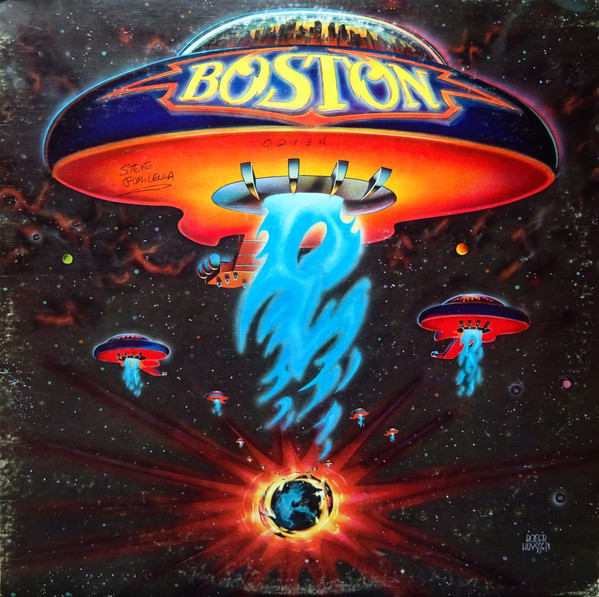
Boston’s self-titled 1976 debut was pressed in enormous numbers, so finding a vinyl copy is not difficult. Finding the right copy requires more care.
Two records with the same orange Epic label can use different mastering on one or both sides. Modern buyers can also choose between the Friday Music 180g reissue, Mobile Fidelity’s expensive Anadisq edition, Legacy’s 40th-anniversary picture disc and a later standard black-vinyl Legacy release.
The conclusion is unusually clear: a clean US Epic copy mastered by Wally Traugott on both sides is the strongest-supported version. The important part is checking the runout. An orange label or original-looking jacket does not prove that both sides use Wally’s mastering.
Quick verdict
- Best overall pressing: US Epic Wally Traugott cut
- What to look for:
WlyorWallyandMASTERED BY CAPITOLon both sides - Best smoother vintage alternative: Allen Zentz mastering
- Best current standard option: Black-vinyl Sony Legacy reissue
- Reissue least likely to justify a premium: Friday Music 180g
- Most questionable audiophile edition: Mobile Fidelity Anadisq
MFSL 1-249 - Collector-only recommendation: 2016 Legacy picture disc
- Also worth avoiding at premium prices: CBS Mastersound half-speed edition
The Wally pressing wins because it has the strongest direct comparison evidence for punch, weight, guitar texture and dynamic energy. The alternative Allen Zentz cut sounds smoother at the top in one comparison, but gives up some of the Wally’s force.
The current Legacy black vinyl may be the easiest new copy to buy, but no detailed comparison in the reviews proves that it equals or surpasses a clean Wally.
Why Boston pressings can sound different
Boston’s debut is built from carefully layered guitars, keyboards, harmonies and rhythm tracks.
Tondo Music describes the record as a combination of layered harmonics and melodies held together by Brad Delp’s wide vocal range and Tom Scholz’s recognizable guitar production.
That dense construction places particular demands on a vinyl pressing. During the loudest passages, a weak copy can make the guitars and vocals merge into a thick mass. A stronger copy preserves weight while allowing individual parts to remain distinct.
The vintage-copy evaluations from The Skeptical Audiophile focus on the same qualities: chorus scale, warmth, vocal presence, bass weight and separation through the layered guitars. The site sells specially selected records, so its best examples should not be treated as representative of every old Epic pressing.
Several tracks provide useful comparison points:
- “More Than a Feeling” reveals vocal presence, guitar body and upper-frequency edge.
- “Peace of Mind” shows whether the drums and guitars retain punch as the arrangement grows.
- “Foreplay/Long Time” tests organ weight, percussion, acoustic-guitar texture and the transition into the full band.
- The closing choruses reveal whether the pressing expands dynamically or turns congested.
Those specific tests come from the direct Wally-versus-Zentz comparison rather than being invented as general listening advice. (The Vinyl Press)
How to identify the Wally pressing
The original US album was released by Epic under catalogue number PE 34188. Early and later orange-label copies do not necessarily use the same mastering.
Collectors should inspect both runouts for:
WlyorWallyMASTERED BY CAPITOL- Wally markings on both side one and side two
The sleeve may credit Wally Traugott even when the actual record does not use his cut on both sides. In one Audiokarma discussion, the thread starter had a copy with Wally’s signature only on side two. Participants explained that the other side had apparently been recut by a different engineer after the earlier stamper was no longer being used.
That means descriptions such as “original orange-label Boston” or “Wally mastered” are incomplete unless the seller provides both runouts.
One documented early example uses PAL-34188 on side one and PBL-34188 on side two, with Wly and MASTERED BY CAPITOL. Matrix suffixes can vary, so buyers should not assume that one exact suffix is the only acceptable Wally pressing.
Wally Traugott vs Allen Zentz
The most useful source for this comparison is The Vinyl Press, which played a Wally copy against a separate mastering by Allen Zentz.
“More Than a Feeling”
The Zentz copy had less edgy and more pleasant high frequencies. The Wally sounded more robust and forceful.
This is important because it prevents the comparison from becoming one-sided. The Zentz version has a genuine advantage for listeners who find the Wally’s upper range too aggressive.
“Peace of Mind”
Both copies were considered good. However, the Zentz pressing did not remove the brightness in every part of the track, while the Wally delivered more punch.
“Foreplay/Long Time”
The differences became clearer:
- The Wally gave the organ, percussion and upper bass more weight.
- The opening section sounded more vibrant.
- The acoustic-guitar strings had greater texture.
- The drums had more kick.
- The transition into “Long Time” carried greater physical impact.
The writer ultimately chose the Wally while still describing both versions as good masterings by respected engineers.
Analoq’s synthesis
The direct comparison supports this buying split:
Choose the Wally for weight, punch and energy. Consider the Zentz cut when smoother high frequencies matter more than maximum impact.
The available runout documentation is not clear enough to identify every Allen Zentz variation, so we avoid inventing a specific matrix for that version.
Are all Wally pressings equally good?
The sources do not establish that every Wally stamper sounds identical.
What they do establish is that copies with Wally’s signature are repeatedly preferred to generic later pressings. One Audiokarma owner describes finding a clean Wally that sounded substantially better than an ordinary late-1970s copy they already owned.
Other participants repeatedly identify the two-sided orange-label Wally as the version to seek, while warning that many surviving copies were played heavily.
Condition remains essential. A noisy or groove-worn Wally should not automatically be purchased over a clean Zentz or modern reissue simply because its deadwax has the preferred signature.
Friday Music 180g reissue
The Friday Music reissue has impressive-sounding production credits.
Retail documentation credits Joe Reagoso and Kevin Gray with mastering from the original Epic Records tapes at AcousTech. Versions have appeared on black and coloured vinyl.
Those credits do not prove that the release used a completely analogue cutting chain. Unless more specific documentation is available, it should not be advertised as an established AAA release.
TONE Audio’s review provides the most useful listening evidence. Its copy was:
- Generally quiet
- Bright
- Relatively flat in presentation
- Slightly off-centre
The reviewer compared it with an inexpensive clean original and found that the vintage copy sounded just as good. The result was not that Friday Music was unlistenable, but that it failed to provide a clear improvement over a common original.
Audiokarma opinions are mixed. One participant describes Friday Music as lacking compared with the Wally pressing, while other owners have reported enjoying the reissue.
Verdict on Friday Music
The reviews do not support paying a large premium for it.
A clean Friday Music copy may still be useful when vintage condition is uncertain, but it is not proven to outperform a good original—and the strongest available review says it does not.
Mobile Fidelity Anadisq MFSL 1-249
Mobile Fidelity released Boston’s debut as a numbered 200g Anadisq pressing under catalogue number MFSL 1-249.
The principal detailed review is strongly negative. The Skeptical Audiophile describes the MoFi as thick, opaque, blurry and murky, with too little energy and presence compared with stronger vintage copies.
A related customer comparison from the same source network preferred a selected vintage pressing over both the MoFi and CBS half-speed editions.
That evidence needs to be represented accurately:
- It is an exact, detailed rejection of the MoFi.
- It comes mainly from one publication and its customers.
- It does not establish universal agreement across every system and listener.
Verdict on MoFi
The MoFi carries premium branding, weight and collectability, but the available detailed evidence does not support it as the best pressing.
The safest wording is:
The strongest available comparison finds the Anadisq version thick and lacking energy, but independent Boston-specific MoFi comparisons remain limited.
What about the CBS Mastersound half-speed?
The CBS Mastersound also receives negative evidence.
One Audiokarma owner who later obtained a Wally described the half-speed as dull, flat and lacking life.
The Skeptical Audiophile similarly criticizes it for insufficient low-frequency weight. That review says the upper and middle frequencies can be clean, but the record does not produce the bass power the writer expects from Boston.
The CBS edition may sound cleaner than poor domestic copies, but it does not beat a strong Wally based on the comparisons available.
Legacy 40th-anniversary picture disc
Legacy Recordings officially released Boston as a 150g picture disc in December 2016 as part of its “Legacy Celebrates” anniversary series. The announcement focuses on its commemorative format and artwork rather than claiming audiophile sound quality.
The most detailed long-term owner report comes from A Cup of Joe.
The writer bought the picture disc in 2020 and reported that, after approximately four years, much of it sounded muffled. “Long Time” and most of side two were compared with hearing the music through a pillow. The owner stopped using it and purchased a standard black-vinyl copy instead.
This is one owner’s experience. It does not prove that every copy physically deteriorates in the same way.
Other retail customer reports have mentioned surface noise, warping and weak playback quality, while some buyers were satisfied with the presentation.
Verdict on the picture disc
Buy it for the visual design and anniversary collectability, not because any review establishes a sound advantage.
A sound-first buyer should choose black vinyl.
Later Sony Legacy black vinyl
The later black-vinyl Legacy edition is the simplest modern option for a buyer who wants a new or recent standard record.
The available evidence is limited:
- An Audiokarma owner reports being satisfied with a Legacy pressing.
- Another forum owner describes a later Legacy copy positively.
- The A Cup of Joe writer bought black vinyl after rejecting the picture disc, but did not publish a detailed completed comparison of the replacement.
There is no strong side-by-side test showing that the Legacy black vinyl beats the Wally, Zentz or Friday Music editions.
Verdict on Legacy black vinyl
It is the most straightforward current-style choice, but it should not be promoted as the best-sounding pressing without stronger comparison evidence.
What Analoq listeners have reported
The album currently has one Analoq community review.
That entry praises the album’s importance and commercial certification, but it is not attached to an exact pressing and contains no runout information or sound comparison.
It therefore cannot support:
- A Wally recommendation
- A modern-reissue verdict
- A claim about bass, treble or soundstage
- An Analoq community consensus
Until more exact-copy reviews are added, the pressing conclusions must come from the external reviews.
Best edition by buyer type
Best overall: two-sided Wally original
Look for Wly or Wally and MASTERED BY CAPITOL on both sides. Prioritize playing condition after confirming the mastering.
Best smoother original: Allen Zentz cut
The one direct comparison finds smoother upper frequencies, although with less weight and punch than Wally.
Best simple modern option: Legacy black vinyl
Choose it when avoiding used-record condition and deadwax research is more important than owning the best-supported mastering.
Reissue that may not justify its price: Friday Music
Its credits are attractive, but the main review found a cheap clean original sounded just as good.
Premium edition to approach cautiously: MoFi Anadisq
The strongest detailed source describes it as thick and lacking energy. Independent evidence is too limited to call that a universal consensus.
Collector edition: Legacy picture disc
Choose it for display. One long-term owner reported severe muffling, and no source establishes it as a sound-quality upgrade.
Final verdict
The best-supported vinyl pressing of Boston’s debut is a clean US Epic Wally Traugott cut with Wly/Wally and MASTERED BY CAPITOL on both sides.
The direct Vinyl Press comparison prefers it to the Allen Zentz mastering for punch, organ weight, percussion, acoustic-guitar texture and drum impact. Multiple Audiokarma owners independently recommend the same two-sided Wally configuration.
The Zentz cut remains a credible alternative for listeners who prefer smoother high frequencies.
None of the premium reissues clearly displaces the Wally:
- TONE found Friday Music no better than an inexpensive original.
- The main MoFi review rejected the Anadisq’s thick and murky presentation.
- The CBS Mastersound receives criticism for weak bass and limited energy.
- The picture disc is primarily a collectible and has negative owner reports.
- The black-vinyl Legacy edition lacks a detailed comparison proving that it beats the best vintage cuts.
The practical buying process is:
- Check both runouts.
- Confirm
Wly/WallyandMASTERED BY CAPITOLon each side. - Inspect the vinyl for groove wear and damage.
- Consider a clean Zentz or Legacy copy when the Wally is worn.
- Do not assume heavyweight or audiophile-branded vinyl is automatically superior.
Sources and further reading
- The Vinyl Press — A Tale of Two Masterings
- Audiokarma — Boston Wally Traugott Pressing
- Audiokarma — Boston Album: Best Sound?
- Audiokarma — Wally owner report
- TONE Audio — Boston
- The Skeptical Audiophile — Boston’s First Album on MoFi Anadisq
- The Skeptical Audiophile — CBS Half-Speed Review
- The Skeptical Audiophile — Vintage Boston Pressings
- Legacy Recordings — Boston 40th Anniversary Picture Disc
- A Cup of Joe — Boston Picture Disc Owner Review
- Tondo Music — Boston’s Self-Titled Debut
- One Analoq community entry, currently without an identifiable pressing.