%2Fandroid-chrome-192x192.png&w=3840&q=75)
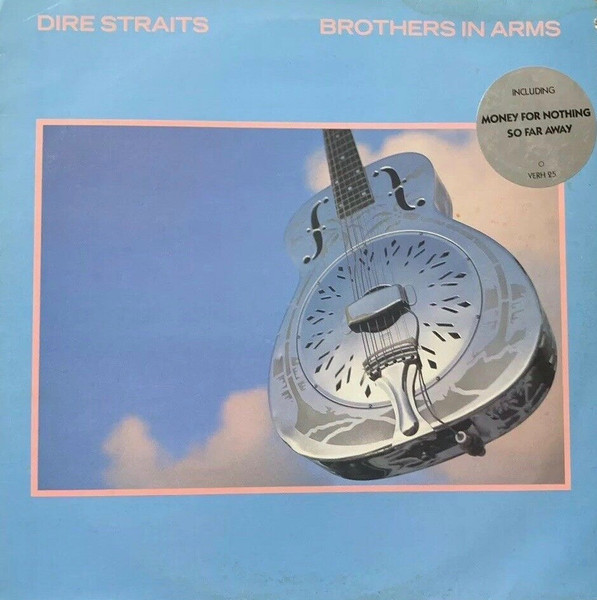
Best Brothers in Arms Vinyl Pressing: Original RL vs MoFi, Abbey Road and More
Dire Straits’ Brothers in Arms is easy to find on vinyl. Choosing the right version is harder.
Collectors can choose between inexpensive 1985 originals, Robert Ludwig-cut copies, the 2006 Stan Ricker double LP, the Mobile Fidelity 45 RPM edition, the 2021 Abbey Road half-speed release and several anniversary packages. These editions differ not only in mastering and price, but also in track length and playback convenience.
Quick verdict
- Best for most buyers: Clean 1985 original, preferably with
MASTERDISK RLin the deadwax - Best premium pressing: Mobile Fidelity
MFSL 2-4412LP 45 RPM - Best modern alternative: 2021 Abbey Road half-speed 2LP 45 RPM
- Most interesting overlooked edition: 2006 Stan Ricker 2LP
- Best reason to buy the 2025 anniversary box: The previously unreleased San Antonio concert
A clean original has the broadest support as the sensible purchase. Owners on AudioKarma, Audio Forums and StereoNET repeatedly describe good 1985 copies as satisfying and affordable, with Robert Ludwig-marked copies receiving the most specific praise.
The MoFi has the strongest case among premium editions. Detailed reviews from From Vinyl to Plastic, Subjective Sounds and Vinyl Reviews favour its larger presentation, stronger low end and ability to stay composed at higher playback levels.
That does not make the MoFi a universal winner. Forum comparisons show that some listeners hear only a limited improvement over a good original, while others prefer the clarity or value of a different reissue.
Why Brothers in Arms pressings are difficult to compare
The original album was digitally recorded, yet it became one of the records most frequently discussed by hi-fi listeners. Reviewers tend to focus on its production, stereo scale, guitar detail and controlled shifts between quiet and loud passages.
The pressing debate is complicated by three factors.
First, the original 1985 single LP uses shortened versions of several songs. Later double-LP editions can restore the longer running order, but they also require more frequent side changes.
Second, not every original was cut in exactly the same way. A copy labelled Vertigo or Warner Bros. may not carry the same runout information as another copy with similar packaging. Collector discussions therefore place more weight on the deadwax than on the front cover alone.
Third, condition and individual copy quality matter. On The Record says its selected Robert Ludwig-cut copy performed far better than ordinary examples, but it also makes clear that the catalogue number alone does not guarantee the same result.
Rather than declaring that one edition defeats every other pressing, it is more useful to ask which version offers the best value, which has the strongest premium support and which compromises matter to each buyer.
Original 1985 pressing
For most buyers, a clean 1985 original remains the best place to begin.
In an Audio Forums discussion, two participants recommend used Vertigo originals as inexpensive copies that still sound good. The thread offers little direct evidence about the Simply Vinyl reissue, but it supports the idea that buyers do not need an expensive audiophile edition to enjoy the album.
An AudioKarma comparison gives more specific support to originals marked MASTERDISK RL. Several members report that these copies reveal more information and produce a more convincing presentation than other originals they had compared. The same discussion warns that multiple masterings exist, so the recommendation should not be applied to every 1985 copy.
A StereoNET thread on the best vinyl versions reaches a similar practical conclusion. Several owners say inexpensive originals can perform very well, while one participant specifically advises checking for Robert Ludwig’s initials in the runout area.
The strongest qualification comes from On The Record. Its preferred Ludwig-cut copy is presented as unusually strong rather than representative of every original. The publication’s result supports careful copy selection, not blind confidence in any record dated 1985.
What to look for
Collectors searching for an original should pay attention to:
MASTERDISK RLin the deadwax- visible groove wear and surface condition
- seller descriptions of noise during quieter passages
- whether the copy uses the shortened single-LP program
- the exact runout combination rather than the jacket alone
Based on the available reports, an original has the strongest value case. It is common, historically appropriate and capable of excellent playback, but the evidence does not support claiming that every original will sound exceptional.
Mobile Fidelity MFSL 2-441 2LP 45 RPM
The Mobile Fidelity edition receives the most detailed praise among the premium pressings.
From Vinyl to Plastic regards the MoFi as an especially capable edition, highlighting its scale, imaging and vocal presentation. The reviewer heard some background noise during quieter sections on the tested copy, but still gave the pressing a strong recommendation.
Subjective Sounds also responds positively to the MoFi’s presentation and stability at different playback levels. Interestingly, the writer still prefers streaming for normal listening because it avoids repeated record changes. That distinction is useful: a pressing can impress as a physical edition without becoming the most convenient way to hear the album.
The strongest endorsement comes from Vinyl Reviews. Dennis Davis gives the MoFi maximum scores and clearly prefers it to the original, pointing to greater headroom, stronger low frequencies and more instrumental texture, especially at higher volume.
These three reviews give the MoFi the strongest premium case in the available comparisons. It also restores the longer program and gives the music more space across four sides.
Collector discussions are less unanimous.
In an AudioNirvana thread, the opening poster hears little change from a Canadian original. Other owners consider the MoFi more powerful, particularly in the lower frequencies. The thread therefore suggests that the improvement can depend heavily on the playback system and the original copy used for comparison.
A more recent StereoNET comparison includes another disagreement. One participant prefers an earlier 33 RPM reissue because the opening effects on the title track are more clearly separated, while another listener favours the MoFi’s overall weight and enjoyment.
The responsible conclusion is that the MoFi has the broadest premium support, not that every listener will prefer it.
What reviewers tend to compare
When writers and owners compare the MoFi with an original, they usually focus on:
- low-frequency weight and control
- instrument separation
- vocal placement
- soundstage scale
- performance at higher volume
- the difference between impact and precise localization
- the inconvenience of four-side playback
The MoFi is most suitable for buyers who want the complete running order, value a larger presentation and are comfortable paying more for an edition that may offer only a modest improvement over an excellent original.
2021 Abbey Road half-speed 2LP 45 RPM
The 2021 Abbey Road edition is the most credible modern alternative to the MoFi, although the supporting evidence is thinner.
It was issued across two 45 RPM records and restores the longer album program. In the StereoNET discussion, one owner endorses it as a less expensive alternative and considers it competitive with the MoFi.
That is encouraging, but it is not enough to declare the Abbey Road edition superior. There are fewer detailed comparisons of this pressing than of the MoFi, and much of the positive evidence comes from individual owner reports.
Based on the available discussion, the Abbey Road edition is best treated as a practical modern option for buyers who want the complete album at 45 RPM without paying MoFi resale prices.
2006 Stan Ricker 2LP
The 2006 Warner Bros. 49377-1 edition is another full-length double LP. It was half-speed mastered by Stan Ricker and is commonly associated with RTI pressing.
One verified Analoq owner describes the edition as detailed and quiet, with clear separation between instruments. The same entry finds it slightly leaner through the middle and lower frequencies and mentions the inconvenience of four-side playback.
A clearly identifiable customer review for the older Stan Ricker edition also describes a fuller and less aggressive presentation than the original. However, that review appears on an Amazon listing that combines feedback from CDs, SACDs, older vinyl editions and the linked 2025 LP.
The Stan Ricker edition therefore remains interesting but less documented. It may be a good purchase when priced below the MoFi, but there are not enough comparisons to rank it above the original or the better-documented premium edition.
Simply Vinyl and Back to Black
The gold-sticker Simply Vinyl release receives a qualified recommendation from On The Record. The publication considers its tested copies better than typical pressings, but still places them below the vintage copies selected through its own comparisons.
That makes the Simply Vinyl edition a respectable reissue rather than a clear destination pressing. The older Audio Forums discussion also provides almost no direct comparison of it, with participants instead returning to affordable Vertigo originals.
The 2010 Back to Black edition receives more detailed coverage from The Vinyl Review Blog. The review praises its low-frequency weight and clear upper range, but criticizes the changed song endings and finds the opening drums on “Money for Nothing” less forceful than on the original.
Based on those reports, both editions can sound satisfying. Neither has enough comparative support to replace a clean original as the default recommendation.
What other listeners have flagged on key tracks
These are the details that reviewers and collectors tend to discuss when comparing editions.
“Money for Nothing”
Comparisons often focus on the impact of the drum entrance, the weight of the bass and whether the arrangement becomes hard or congested. The Vinyl Review Blog specifically finds the Back to Black edition less forceful than the original at the opening.
“Your Latest Trick”
Its quieter sections make surface noise and low-level detail easier to notice. From Vinyl to Plastic reports some audible background noise on the writer’s MoFi copy, though that reflects one physical record rather than the entire pressing run.
“Brothers in Arms”
Listeners frequently compare the atmosphere, guitar decay and separation of the opening sound effects. The StereoNET disagreement shows that a heavier presentation is not automatically the same as a more clearly separated one.
What two Analoq listeners noticed
Analoq currently has only two relevant ownership entries, so they should not be presented as a broad community vote.
One listener owns a 1985 UK Vertigo copy and describes the album as spacious, polished and carefully constructed. The listener respects its craft more than they connect with it emotionally.
The other owns the 2006 Stan Ricker double LP and values its quiet surfaces, detail and complete track lengths, while finding the tonal balance slightly lean and the repeated side changes inconvenient.
These entries provide useful ownership context, but the main ranking is based more heavily on the larger set of specialist reviews and collector discussions.
What about the 2025 anniversary editions?
Most of the strongest discussion around the 2025 package concerns the previously unreleased San Antonio concert.
Across several relevant pages of A Mark In Time Forums, members praise the concert’s performance and clear mix. Only one visible owner comments directly on the vinyl box, responding positively to playback while criticizing the inner packaging.
Amazon is not reliable for a pressing-specific conclusion because its listing pools reviews from several formats and editions. The customer feedback strongly supports the album’s popularity and Mark Knopfler’s playing, but it cannot establish that the linked 2025 LP is the best studio pressing.
The anniversary box therefore makes most sense for committed fans who want the live material and expanded package.
Best Brothers in Arms pressing by budget
Best lower-cost option: clean 1985 original
A good original has the strongest combination of price, availability and repeated collector support. Search for an RL-marked copy where possible, but do not ignore condition or runout variation.
Best premium option: Mobile Fidelity MFSL 2-441
The MoFi has the deepest set of detailed positive reviews. Choose it for the complete album, larger presentation and premium format rather than expecting every system to reveal a dramatic improvement.
Best modern alternative: 2021 Abbey Road 45 RPM
This is the most promising current alternative when the MoFi is too expensive. The recommendation is provisional because fewer detailed comparisons are available.
Most interesting overlooked option: 2006 Stan Ricker 2LP
The Stan Ricker edition may offer a useful middle route, but its evidence base remains smaller.
Final verdict
Based on the available specialist reviews and collector reports, a clean 1985 original pressing is the best purchase for most people.
The recommendation is strongest for copies carrying MASTERDISK RL in the deadwax, but it does not imply that every original uses the same mastering or sounds equally good. Condition, runout information and individual copy quality remain important.
The Mobile Fidelity MFSL 2-441 2LP 45 RPM is the strongest premium choice. Multiple detailed reviews prefer its scale, low-frequency performance and ability to remain controlled at higher volume. Forum disagreement prevents it from being treated as an automatic winner over every original.
The 2021 Abbey Road 45 RPM is the most credible modern alternative, especially when its price is substantially lower than the MoFi. The 2006 Stan Ricker edition also deserves consideration, although it currently has less independent comparative support.
In practical terms:
- Choose an original for value and convenience.
- Choose the MoFi for the strongest premium evidence.
- Choose the Abbey Road edition for a modern full-length alternative.
- Consider the Stan Ricker edition when it appears at a reasonable price.
- Choose the anniversary box mainly for the live concert.
Sources and further reading
- From Vinyl to Plastic — Dire Straits: Brothers in Arms 45 RPM Vinyl Review
- On The Record — Dire Straits: Brothers in Arms
- On The Record — Brothers in Arms Simply Vinyl Reviewed
- Subjective Sounds — Dire Straits: Brothers in Arms Album Review
- The Audiophile Man — Dire Straits Vinyl Box Set Review
- The Vinyl Review Blog — Brothers in Arms Back to Black Vinyl
- Vinyl Reviews — Brothers in Arms
- Audio Forums — Brothers in Arms Vinyl LP Discussion
- AudioKarma — Brothers in Arms Comparison
- AudioNirvana — MoFi 2LP 45 RPM Discussion
- StereoNET — Best Vinyl Versions of Brothers in Arms
- StereoNET — Brothers in Arms Pressing Comparison
- A Mark In Time Forums — Brothers in Arms 40th Anniversary Discussion
- Amazon Customer Reviews — Brothers in Arms Anniversary Listing