%2Fandroid-chrome-192x192.png&w=3840&q=75)
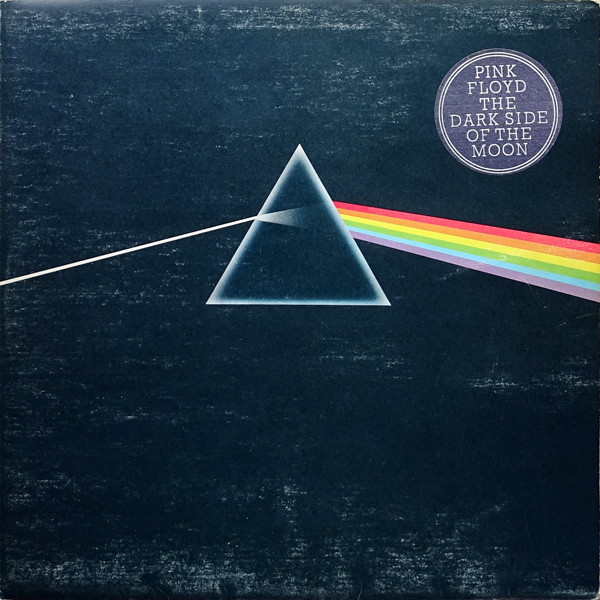
Best Pink Floyd Dark Side of the Moon Vinyl Pressing: Original UK vs 2003, MoFi, Japanese and 2016
Few albums have been pressed on vinyl as many times as Pink Floyd’s The Dark Side of the Moon. That gives buyers plenty of choices, but it also creates confusion.
A listing might promote a solid-blue-triangle UK copy as the ultimate original. Another seller may recommend the 2003 30th Anniversary pressing, an old Mobile Fidelity edition, a quiet Japanese copy or the much easier-to-identify 2016 reissue.
None of these options has a completely uncontested reputation.
Quick verdict
- Strongest premium candidate: 2003 30th Anniversary pressing
- Strongest vintage reference: A clean, fully identified early UK Harvest pressing
- Best practical reissue: 2016 Pink Floyd Records
PFRLP8 - Best quiet vintage alternative: Japanese Harvest
EOP-80778 - Most divisive audiophile pressing: Mobile Fidelity
MFSL 1-017 - Best collector pressing: UK solid-blue-triangle first issue
- Best modern display edition: 2024 UV-printed clear 2LP
The 2003 30th Anniversary pressing has the strongest support in the professional comparison sources, particularly for clarity, depth, bass attack and focus. However, some of the greatest praise concerns an RTI test pressing, while owners of commercial copies report more varied results.
A clean early UK pressing remains an important reference, but the solid-blue label alone does not prove that a copy came from an early stamper or that it will outperform every later cut.
For buyers who want a strong copy without studying 1970s mother and stamper codes, the 2016 PFRLP8 is the most practical recommendation.
Why pressing choice matters on this album
The Dark Side of the Moon moves continuously between music, spoken voices, clocks, cash registers, footsteps and synthesizer effects. A good pressing must preserve those transitions without turning the album into a collection of exaggerated sound effects.
“Breathe” quickly reveals whether the vocals sound natural or muffled. The clocks at the beginning of “Time” test transient attack and upper-frequency control. “Money” needs enough bass definition to keep its groove clear beneath the register loop, while “Us and Them” depends on a quiet background and a stable sense of depth.
“The Great Gig in the Sky” is particularly sensitive to groove wear and surface noise. A rare pressing in poor condition can therefore be less satisfying than a clean modern reissue.
That is why pressing identity matters, but condition matters as well.
The original UK Harvest pressing
The first UK issue uses Harvest catalogue number SHVL 804 and solid light-blue triangle labels. The commonly discussed first-issue matrices are A-2/B-2.
However, Pink Floyd Archives documents many different mother and stamper combinations beneath those same matrices. A solid-blue copy is a first issue, but that does not establish how early the individual record was pressed. Mother and stamper codes in the runout are required to make that distinction. (Pink Floyd Archives)
The archive also reports minor sound problems during “Money” on the A-2/B-2 lacquers. Some copies contain a skip pressed into the groove. These issues were corrected on later A-3/B-3 cuts, although peak distortion during the opening clocks of “Time” remained.
That documentation does not prove that every A-3/B-3 sounds better than every A-2/B-2. It only shows that the earliest cut had known problems that were addressed later.
How the UK original sounds in comparisons
Vinyl Reviews compared an original UK pressing with the 2016 edition and the 2003 anniversary pressing. The original provided stronger bass attack, more forward vocals and better focus when the arrangement became dense during “Us and Them.” Its guitar solo on “Time” also sounded edgier than on the 2016 copy.
The Audiophile Man recommends an original UK solid-blue pressing with an early stamper as the collector choice, while separately saying that the 2003 anniversary edition was the best vinyl version the writer had heard.
Who should buy it?
Choose an early UK pressing when historical relevance and exact pressing identification matter to you.
Do not buy solely from a photograph of the blue triangle. Ask for:
- Complete side-one and side-two matrices
- Mother and stamper codes
- Confirmation of playback condition
- Information about noise during quiet passages
- Confirmation that “Money” plays without a pressed-in skip
The solid-blue version is the clearest collector prize. The sources do not establish it as an automatic sonic winner.
The 2003 30th Anniversary pressing
The 30th Anniversary edition has the strongest professional case for being the best-sounding version, but the RTI test pressing and the finished commercial release should be judged separately.
The RTI test pressing
Steve Hoffman reported that Doug Sax and Kevin Gray mastered the record at AcousTech using Sax’s tube playback machine and the original Dolby A master mixes. According to Hoffman, no high-frequency limiting was applied. He was reviewing an RTI test pressing, whose surfaces he described as extremely quiet. (Acoustic Sounds News)
Richard Foster compared that test pressing with:
- An early UK solid-blue
A-2/B-2 - The standard Mobile Fidelity LP
- The Mobile Fidelity UHQR
- Two Japanese Toshiba editions
Foster had previously preferred his UK copy but placed the test pressing ahead of it for clarity, openness, transient response, punch and bass balance.
The metal parts were processed at RTI, but Hoffman explicitly noted that the finished records were pressed elsewhere. The test pressing should therefore not be treated as proof that every commercial copy performs identically.
Commercial pressing comparisons
Vinyl Reviews also preferred a commercial 30th Anniversary copy over its original UK and 2016 pressings. The review praises its deep soundstage, natural presentation, bass attack, snare impact, cymbal sustain and ability to remain focused through the crescendos in “Us and Them.”
The Audiophile Man reaches a similar conclusion, naming the 30th Anniversary LP as the best vinyl edition the writer had heard.
Collector discussions are less consistent. In the Audiogon discussion, some listeners praise the added clarity and quieter surfaces. Others find commercial copies dull, boomy or less musically involving than vintage UK vinyl.
This disagreement is worth keeping. The 2003 edition comes across as the strongest premium candidate, but not as an uncontested winner.
Who should buy it?
Choose the 30th Anniversary pressing when you find a clean commercial copy at a price you consider reasonable and value:
- Deep spatial presentation
- Strong bass attack
- Clear transients
- Quiet surfaces
- Focus during dense sections
Its reputation is better supported than most reissues, but copy variation remains part of the evidence.
The 2016 Pink Floyd Records PFRLP8
The 2016 reissue is easier to identify than vintage copies.
Pink Floyd Archives documents BG in the runout, along with European Record Industry pressings and American variants manufactured at Record Industry or RTI. The release arrived in November 2016. (Pink Floyd Archives)
The packaging states that the album was remastered from the original analogue tapes by James Guthrie, Joel Plante and Bernie Grundman. Vinyl Reviews speculates that a digital intermediate may have been used, but clearly identifies that as a guess. It should not be repeated as confirmed fact.
What the comparisons found
Compared with an original UK pressing, Vinyl Reviews hears:
- Fuller bass
- Less aggressive upper frequencies
- More space around the effects in “On the Run”
- Greater definition in background voices
- More warmth and texture in the saxophone
- A more layered presentation during “Any Colour You Like”
The original still has sharper bass attack, more forward vocals and better focus during the loudest parts of “Us and Them.”
Vinyl Philosophy compared a clean 1973 copy with the 2016 and found them very similar. The newer copy had almost no surface noise and slightly fuller, more controlled bass.
Magic Vinyl Digital was less enthusiastic. Its tested copy had good manufacturing quality and low noise, but the reviewer considered its balance less natural than the Japanese vintage pressing. (Magic Vinyl Digital)
Who should buy it?
The 2016 is the strongest recommendation for someone who wants:
- Quiet modern vinyl
- Full bass
- A clearly identifiable pressing
- No need to research early UK stampers
- A strong presentation without paying mainly for rarity
It is not universally preferred to the original or 2003 edition, but none of the reviews treats it as a poor pressing.
The Japanese Harvest EOP-80778
The Japanese EOP-80778 deserves more than the usual claim that Japanese vinyl is quiet.
Pink Floyd Archives documents more than one Japanese issue under the same catalogue number. Label company wording, inserts and runout details are therefore necessary before calling a copy the Japanese first pressing. (Pink Floyd Archives)
Magic Vinyl Digital tested a 1973 Japanese edition and called it the most homogeneous vinyl version in its comparison. The review praises its low surface noise, full bandwidth and natural tonal balance.
An Analoq owner of an exact EOP-80778 copy reports a full, room-filling sound in which the bells and effects appear to linger around the listening space. A second Analoq entry confirms ownership of the same release but is too brief to support a detailed sonic conclusion.
Who should buy it?
Choose a correctly identified Japanese copy when quiet surfaces and tonal balance are more important than owning the earliest UK issue.
The evidence supports it as a serious vintage alternative, not merely a packaging collectible.
Mobile Fidelity MFSL 1-017
The standard Mobile Fidelity LP and the UHQR are separate releases.
Pink Floyd Archives identifies the standard MFSL 1-017 as a Stan Ricker cut pressed by JVC in Japan. The later UHQR uses catalogue number MFQR 1-017, weighs 200 grams and was issued in a numbered run of 5,000 boxed copies. (Pink Floyd Archives)
The standard MoFi receives consistent praise for pressing quality but conflicting descriptions of its tonal balance.
Magic Vinyl Digital finds it close to the Japanese pressing, with more detailed high frequencies and strong manufacturing quality.
The Audiophile Man agrees that the Japanese-pressed vinyl is quiet but considers the upper frequencies too elevated.
That makes the MoFi a presentation to choose deliberately rather than a universally safe upgrade.
Who should buy it?
Choose the MoFi when you value:
- Quiet JVC vinyl
- A wide presentation
- Strong separation
- More prominent upper-frequency detail
Avoid assuming that its “Original Master Recording” branding guarantees the most natural balance.
The 2023 and 2024 anniversary editions
Pink Floyd’s official site identifies the 2023 edition as a new remaster by James Guthrie and Joel Plante. It first appeared in the 50th Anniversary set and was also released separately on 180g vinyl. (Pink Floyd official site)
Magic Vinyl Digital finds the 2023 tonal balance closer to its original reference than the 2016 version. However, the tested pressing was less precise than the other vinyl editions in the comparison and showed reduced upper-frequency extension in its measurements. Surface noise was low.
The 2024 clear edition spreads the album across two single-sided discs. UV artwork is printed on the non-groove side of each record, leaving the playable sides free from printed imagery. It uses the anniversary mastering rather than introducing a new sonic version.
The 2024 edition’s clearest advantage is its physical presentation, not proven superior sound.
What Analoq owners noticed
The Analoq database contains four relevant entries:
- One review attached to the 2016 European
PFRLP8 - Two entries attached to Japanese
EOP-80778 - One entry attached to a UK
SHVL 804
The 2016 owner focuses mainly on Richard Wright’s musical contribution and the different collecting appeal of UK, Japanese, German and US editions. It is ownership context rather than a direct pressing comparison.
The substantial Japanese review reports a full presentation, room-filling effects and strong flow between songs.
The UK owner stresses that a solid-blue label is not sufficient for determining how early an individual copy is. The same review recommends using “Time,” “Money,” “Us and Them” and “The Great Gig in the Sky” to evaluate attack, bass separation, soundstage, vocal presence and surface noise.
These are individual owner observations rather than a community verdict.
Best pressing by buyer type
Strongest premium candidate: 2003 30th Anniversary
It receives the strongest professional comparison support, particularly for clarity, depth, bass attack and focus. Commercial-copy variation prevents an unconditional verdict.
Strongest vintage reference: clean early UK Harvest
Buy it for original-era character, attack and presence. Verify the complete matrix, mother, stamper and condition rather than relying on the label alone.
Best practical reissue: 2016 PFRLP8
It offers quiet vinyl, fuller bass and reliable identification. Sources differ over whether its balance is as natural as the strongest vintage copies.
Best quiet vintage alternative: Japanese EOP-80778
It has strong support for low noise and even tonal balance. Confirm the exact Japanese issue.
Most divisive: Mobile Fidelity MFSL 1-017
Its quiet surfaces and wide staging are strengths, but listeners disagree about its upper-frequency balance.
Best display edition: 2024 clear UV 2LP
Buy it for the physical design. The available reviews do not support treating it as a new sonic benchmark.
Final verdict
The 2003 30th Anniversary pressing is the strongest-supported premium version of The Dark Side of the Moon. Acoustic Sounds’ RTI test-pressing report, Vinyl Reviews and The Audiophile Man all prefer the mastering in their comparisons.
That conclusion requires an important limitation: the exceptional test pressing was not the same physical pressing as the finished commercial copies, and retail owners report more variable results.
A clean early UK pressing remains the most important vintage reference. It can provide stronger attack, forward vocals and excellent focus, but buyers must inspect more than the solid-blue label. The same A-2/B-2 matrices appeared across multiple mothers and stampers, and the earliest lacquer has documented problems during “Money.”
The 2016 PFRLP8 is the most practical purchase. It offers quiet modern vinyl, fuller bass and strong overall presentation without the identification problems or prices attached to rare UK copies.
The Japanese EOP-80778 is a credible quiet alternative, while the Mobile Fidelity edition is best suited to listeners who knowingly prefer its more prominent upper-frequency presentation.
No pressing defeats every other copy on every system. The responsible buying order is:
- Verify the exact release.
- Check the runout rather than relying on the cover.
- Prioritize playing condition.
- Choose the tonal presentation supported by the comparisons.
- Pay collector prices only when collectability itself matters.
Sources and further reading
- Pink Floyd Archives — UK LP discography
- Pink Floyd Archives — Japanese LP discography
- Pink Floyd Archives — Mobile Fidelity discography
- Pink Floyd Archives — US and 2016 LP documentation
- Acoustic Sounds News — Steve Hoffman and Richard Foster review the 2003 test pressing
- Vinyl Reviews — Original UK, 2003 and 2016 comparison
- The Audiophile Man — Dark Side of the Moon edition guide
- Vinyl Philosophy — 1973 pressing versus 2016 remaster
- Magic Vinyl Digital — Multi-format and anniversary comparison
- Pink Floyd — 50th Anniversary edition
- Audiogon — 30th Anniversary owner discussion
- Four Analoq community entries tied to the 2016 European, Japanese
EOP-80778and UKSHVL 804editions.