%2Fandroid-chrome-192x192.png&w=3840&q=75)
Best Radiohead OK Computer Vinyl Pressing: Original Parlophone vs 2008, 2016 XL and OKNOTOK
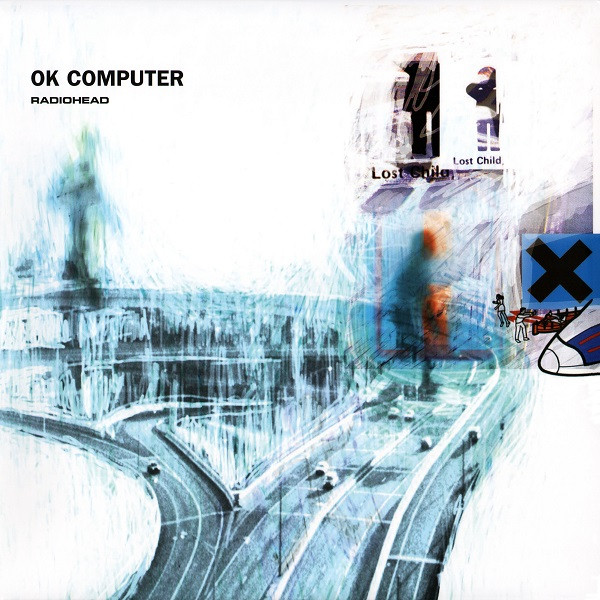
Radiohead’s OK Computer has several vinyl editions that look similar but do not necessarily use the same mastering or manufacturing chain. Buyers commonly encounter the 1997 Parlophone original, a 1998 180g repress, European and US reissues from 2008, the 2016 XL edition and the expanded 2017 OKNOTOK set.
The main divide is between the original Chris Blair mastering family and the later Bob Ludwig remaster used for OKNOTOK. The older Parlophone versions are repeatedly praised for space, texture and natural dynamics. The 2017 remaster receives strong support for detail, separation and bonus content, but some listeners find it louder, drier or less open, and several reports mention physical pressing defects.
Quick verdict
- Best overall sound: A clean Parlophone pressing using Chris Blair’s original mastering
- Best collector edition: 1997 Parlophone
NODATA 02 - Best value within the original mastering family: 2008 European Parlophone repress
- Best straightforward modern 2LP: 2016 XL
XLLP781 - Best for sound plus bonus material: 2017 OKNOTOK
XLLP868 - Edition to approach cautiously: 2008 US Capitol 180g reissue
No one can promise that every 1997 original beats every 1998 or 2008 Parlophone copy. The Chris Blair mastering family is the strongest sound-quality target, with the 2008 European Parlophone receiving the clearest direct value recommendation.
Why OK Computer exposes pressing differences
The album is long, dense and built around contrast. Quiet vocals and restrained guitar passages suddenly open into distorted guitars, electronic textures and large atmospheric sections.
A strong pressing must preserve background silence, instrumental separation, Thom Yorke’s vocal presence and Phil Selway’s drum texture. “Let Down” tests gradual build-up, “Climbing Up the Walls” tests dense production, and “The Tourist” reveals drum weight and spatial depth.
Analog Planet says the older Chris Blair cut reveals texture, timbre, background silence and space that its 2017 OKNOTOK copy does not reproduce as convincingly. The reviewer particularly notices the difference in “The Tourist.”
Vinyl Reviews reaches the opposite conclusion about the remaster itself. It praises the 2017 edition for separation, vocal presence and more clearly placed instruments, although its physical review copy contained visible defects and repeated popping.
Mastering quality and pressing quality therefore need to be judged separately.
The original 1997 Parlophone pressing
The original UK release appeared on Parlophone as a two-LP set with catalogue number NODATA 02. Chris Blair mastered and cut the lacquer at Abbey Road.
Documented first-issue runouts include the original A-1-1, B-1-1, C-1-1 and D-1-1 family together with handwritten phrases such as:
- “I Like You, You Are A Wonderful Person”
- “I’m Full of Enthusiasm I’m Going Places”
- “I’ll Be Happy to Help You”
- “I’m an Important Person, Would You Like to Come Home With Me?”
Some copies also carry VINYL BLAIR.
A first pressing should be identified from the complete runout family, Parlophone branding and Chris Blair inscriptions. NODATA 02 alone is insufficient because later Parlophone editions also use that catalogue identity.
A stored Discogs Forum summary reinforces this problem: early listings can contain incomplete or incorrect runout variants.
The original is the strongest collector choice, but the reviews do not establish that it always sounds better than later Parlophone copies using the same mastering lineage.
The 1998 Parlophone 180g repress
The 1998 UK repress retains Chris Blair’s original phrases and matrix family while adding later identifiers such as 8552291 and 1A1, 1B1 or 1C1-style information.
An Analoq owner of an exact 1998 UK Parlophone copy describes physical guitar crunch, a particularly strong presentation of “Let Down” and drum impact during “The Tourist.”
That is the strongest exact-copy Analoq pressing report in the database. It does not compare the repress directly with the 1997 original, so one cannot be declared universally superior.
The 1998 repress is a credible premium alternative for someone who wants the original Chris Blair mastering without paying entirely for first-press collectability.
The 2008 European Parlophone repress
The 2008 European Parlophone repress has the clearest direct recommendation among the reviews.
Analog Planet reviewed a 180g European copy with catalogue number 7243 8 55229 1 8 and says it uses the original UK metal parts and Chris Blair mastering. It clearly outperformed the reviewer’s 2017 OKNOTOK box pressing for texture, timbre, background silence, spatial depth and drum realism.
This remains one direct professional comparison, not proof that every copy sounds identical. Even so, it makes the verified European Parlophone the best-supported value choice within the original mastering family.
Do not confuse it with the 2008 US Capitol reissue
The 2008 US Capitol “From the Capitol Vaults” edition receives more mixed evidence.
In an AudioKarma shootout, the original poster strongly prefers the Parlophone version. The Capitol copy was described as noisier and less well manufactured, with distortion and a serious defect on that record.
Other participants reported acceptable or good Capitol copies, so the evidence does not prove the entire run is defective. A second AudioKarma page mentions surface noise and defects on some Capitol reissues.
The safe conclusion is that the Capitol edition carries greater copy-to-copy risk, while the European Parlophone receives stronger sound-quality support.
The 2016 XL XLLP781
The 2016 XL edition is one of the easiest modern two-LP copies to identify.
Its documented runouts include combinations of XLLP781, BG32239, MPO and 8552291. Listings do not fully agree on whether every copy was physically pressed at MPO or whether MPO handled part of the production while another plant pressed some copies. Identify the edition from catalogue and runouts rather than claiming one universal plant.
The note.com pressing guide recommends the 2016 European XL as the best practical value, citing low noise and stable quality. An AudioKarma participant also reports that an MPO-marked copy sounds excellent.
This is positive evidence, but not a detailed shootout against the 1997 original or 2008 European Parlophone.
The 2016 XL is best described as the strongest straightforward modern two-LP option, not the proven sonic winner.
The 2017 OKNOTOK remaster
The official XL Recordings edition uses catalogue number XLLP868 and contains the remastered album, eight B-sides, “I Promise,” “Lift” and “Man of War.”
Analog Planet identifies the remaster as Bob Ludwig’s 96/24 work, with the vinyl cut by Barry Grint at Alchemy and pressed at Optimal. The reviewer strongly prefers the older Chris Blair cut, describing OKNOTOK as muddier, drier and less spacious.
Other sources strongly disagree.
Vinyl Reviews praises the remaster’s detail, separation, vocal presence and holographic placement. Darko.Audio also hears greater detail and separation. It considers it likely that the LP was cut from the 24-bit/96kHz master, but presents that as a likelihood rather than confirmed cutting documentation.
Complex Distractions says the remaster reveals new layers, while Long Live Vinyl praises the triple-LP package and the presentation of the album’s complex mix.
An Anhedonic Headphones review prefers the older Parlophone as cleaner and more natural. A Tapeheads discussion instead describes strong enthusiasm for OKNOTOK, including the blue-vinyl store edition.
The reviews establish genuine disagreement:
- Chris Blair Parlophone: more natural, spacious and textured to some listeners
- Bob Ludwig OKNOTOK: more detailed, separated and revealing to others
Neither position should be erased.
OKNOTOK mastering versus pressing quality
Vinyl Reviews praises the remaster but reports scuffs, bubbles, scratches and repeated popping on the physical copy.
A buyer may therefore like the 2017 mastering but still receive a noisy record. The evidence does not show that every black or blue copy is defective, nor does it prove that blue vinyl always sounds better.
Check the exact copy for scratches, non-fill, repeated ticks, warping and surface noise through quiet passages.
What Analoq owners reported
One owner of a worldwide 1997 Parlophone NODATA 02 copy says the pressing sounds clean and handles quiet and loud passages without becoming messy.
The owner of the 1998 UK repress praises guitar texture, “Let Down” and the drums in “The Tourist.”
A white-label 1997 UK owner discusses the importance of the two-LP format and the album’s dynamic contrasts, but that copy should not represent the standard retail pressing. The fourth review only says “Good” and provides no usable pressing evidence.
These reports support the Parlophone family without creating an Analoq consensus.
Best edition by buyer type
Best overall sound
Clean Parlophone pressing using Chris Blair’s original mastering
This can include the 1997 original, 1998 repress or verified 2008 European repress. The evidence does not prove they all sound identical.
Best collector pressing
1997 Parlophone NODATA 02 original
Confirm the original matrix family and Chris Blair inscriptions rather than relying on the catalogue alone.
Best value within the preferred mastering
2008 European Parlophone repress
Its recommendation is driven mainly by Analog Planet’s direct comparison.
Best simple modern two-LP
2016 XL XLLP781
Positive owner and guide evidence supports it as a practical option.
Best edition for bonus material
2017 OKNOTOK XLLP868
It adds eight B-sides and three major archival tracks. Its sound is praised by several reviewers but disputed by others.
Edition to approach cautiously
2008 US Capitol 180g
Some copies are well regarded, but the reviews contain enough noise and manufacturing complaints to justify careful inspection.
Final verdict
The strongest source-based target is a clean Parlophone pressing using Chris Blair’s original mastering.
The 1997 original is the collector choice, but it is not clearly better in every way than the 1998 repress or 2008 European Parlophone. The 2008 European edition has the strongest direct value recommendation because Analog Planet found it more spacious, textured and natural than the 2017 remaster.
The 2016 XL is the best-supported straightforward modern two-LP option, although it has not been proven superior to the older Parlophone cut.
The 2017 OKNOTOK edition is the best content-rich package. Several sources praise its detail and separation, while others prefer the older mastering’s openness and natural presentation. Physical defects also appear in some reports, so mastering and manufacturing must be considered separately.
The practical buying order is:
- Verify the complete runouts.
- Do not rely on
NODATA 02alone. - Separate the European Parlophone from the US Capitol reissue.
- Choose OKNOTOK for bonus material and its remastered presentation.
- Prioritize condition over release mythology.
Sources and further reading
- Analog Planet — Vinyl Reports: Old, New, Good, Bad
- Vinyl Reviews — OK Computer OKNOTOK 1997–2017
- Darko.Audio — OKNOTOK review
- Complex Distractions — OK Computer OKNOTOK
- Long Live Vinyl — OKNOTOK review
- Heathen Records — OK Computer pressing guide
- note.com — OK Computer pressing guide
- AudioKarma — Parlophone vs Capitol shootout
- AV NIRVANA — OKNOTOK review
- XL Recordings — Official OKNOTOK vinyl
- Discogs Forum — first-pressing identification
- Steve Hoffman Music Forums — Radiohead vinyl versions
- Anhedonic Headphones — OKNOTOK review