%2Fandroid-chrome-192x192.png&w=3840&q=75)
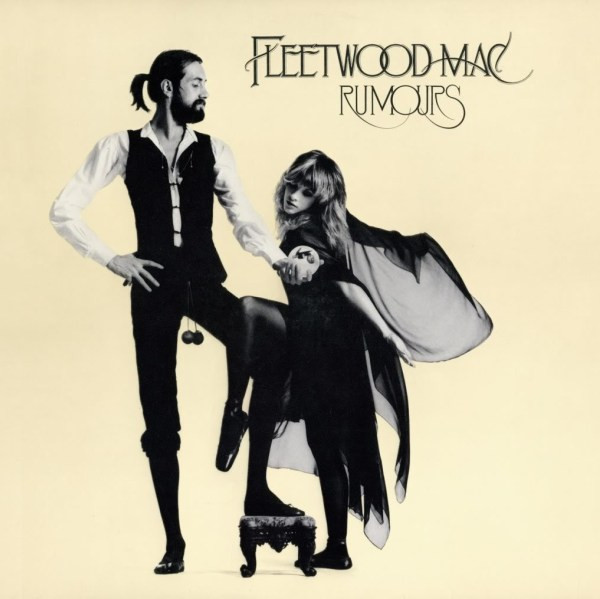
What Is the Best Pressing of Fleetwood Mac’s Rumours on Vinyl?
There is no shortage of vinyl copies of Rumours. You can buy an original from 1977, a common modern reissue, an audiophile 33 RPM edition or a two-record version running at 45 RPM.
The difficult part is that listings often make all of them sound special.
Words such as “original,” “180 gram,” “audiophile” and “remastered” do not automatically tell you how a record sounds. Even two copies carrying the same catalogue number may have been cut or manufactured differently.
After comparing detailed listening tests, professional reviews, collector discussions and wider customer feedback, my overall recommendation is straightforward:
The Steve Hoffman and Kevin Gray 45 RPM edition is the safest choice for the best overall sound.
It is not perfect for everyone. It is expensive, requires frequent record flipping and can sound too warm on some systems. A strong original may feel more immediate and exciting.
However, the Hoffman and Gray mastering receives the most consistent support across independent sources. It offers the best combination of bass weight, dynamics, vocal separation and spaciousness.
Quick recommendations
| What matters most | Recommended version |
|---|---|
| Best overall sound | Hoffman and Gray 45 RPM |
| Best original experience | Clean, play-tested 1977 pressing |
| Best balance of sound and convenience | Hoffman and Gray 33 RPM |
| Best readily available modern option | 2021 Chris Bellman cut |
| Best affordable everyday copy | 35th Anniversary LP |
Why choosing a Rumours pressing is complicated
It is tempting to search for one catalogue number and assume every matching copy is identical.
That does not work particularly well with Rumours.
Original copies were manufactured in large numbers across different plants and countries. Later reissues may share similar packaging while using different mastering. Some modern copies reuse an admired cut but are manufactured at another pressing plant.
The condition of the individual record matters too. A respected pressing can still be noisy, warped or off-centre. A less celebrated version may sound excellent if it was well manufactured and carefully preserved.
The useful question is therefore not simply:
Which release year is best?
It is:
Which mastering do I want, and is the individual copy in good condition?
Best overall: the Hoffman and Gray 45 RPM edition
The most convincing case belongs to the 45 RPM version mastered by Steve Hoffman and Kevin Gray.
Instead of fitting the full album onto two sides, this edition spreads it across four sides. The extra groove space gives the mastering more room to handle loud passages, bass and fine detail.
The result is a bigger and more separated presentation than most ordinary copies.
Across several independent reviews, the same strengths keep appearing:
- John McVie’s bass has more weight and definition
- Mick Fleetwood’s drums sound larger and more physical
- The backing vocals are easier to separate
- Quiet details are more noticeable
- The soundstage feels wider and deeper
- Strong copies have very quiet surfaces
What makes this edition impressive is not merely that it has more bass. The rhythm section becomes more substantial without swallowing the voices. The layered harmonies also sound like separate performances rather than one blended vocal cloud.
Detailed support for this conclusion comes from My Vinyl Review, TONEAudio, Vinyl Reviews and Bob Mersereau’s review.
The main disadvantage
You have to flip the records constantly.
The album is divided across four short sides, so the format interrupts the natural flow more often than a normal LP. That may not matter during focused listening, but it can become annoying when you simply want to play the album from beginning to end.
This is the biggest practical reason to choose the 33 RPM version or a good original instead.
Not everyone prefers its sound
The 45 RPM edition is not universally loved.
In the Audiogon discussion, some listeners strongly favour its bass, scale and separation. Others find it too dark, too heavy in the lower frequencies or less immediate than an original copy.
That does not mean one side is wrong. Vinyl playback depends heavily on the turntable, cartridge, speakers and room. Personal preference matters too.
A listener who values weight, smoothness and space may love the 45 RPM cut. Someone who wants more upper-midrange presence and energy may prefer an original.
Verdict
The Hoffman and Gray 45 RPM is the best overall recommendation, not an edition that will beat every original on every system.
It is the version I would choose for someone who wants the most dependable route to high-end sound and does not mind the extra cost or record flipping.
How to identify the correct 45 RPM pressing
Do not buy it based only on the title of an online listing.
Sellers may use “audiophile,” “deluxe” or “180 gram” without providing enough information to identify the mastering.
The most useful clue is found in the deadwax—the smooth area between the final track and the label.
Look for:
KPG&SH@ATM
This identifies the Kevin Gray and Steve Hoffman mastering.
You should also confirm:
- It contains two records
- The records play at 45 RPM
- The deadwax information is visible or confirmed by the seller
- All four sides have been checked for noise or damage
The year alone is unreliable because the mastering has appeared through more than one production run. A clear photograph of the runout markings is more useful than a marketplace description.
Pallas vs Furnace
Early copies of the Hoffman and Gray edition were pressed at Pallas in Germany. Later production moved to Furnace in the United States while reportedly retaining the same mastering.
This means the two versions may contain the same fundamental groove cut but differ in manufacturing.
The mastering determines the basic tonal balance and dynamics. The pressing plant can affect:
- Surface noise
- Warping
- Centring
- Visual defects
- Consistency between copies
Pallas has the stronger established reputation in the detailed reviews. That makes it the more desirable version when the price difference is reasonable.
However, this should not become another shortcut.
A Pallas copy can still be damaged or noisy, while a well-made Furnace copy can play beautifully. Confirming the Hoffman and Gray mastering and checking the individual record remain more important than chasing a pressing-plant name.
Should you buy an original 1977 pressing?
A good original remains one of the best ways to hear Rumours.
Strong originals can sound lively, open and immediate. They may not have the same low-end scale as the 45 RPM edition, but they often give the music a sense of movement and energy that some modern cuts smooth over.
They also preserve the experience of hearing the album in its original single-LP form.
The difficulty is consistency.
BSK 3010 appears on many copies, but the catalogue number alone does not tell you:
- Which lacquer was used
- Which plant manufactured the record
- How fresh the stamper was
- How much the record has been played
- Whether the groove has been damaged
- Whether quiet sections play cleanly
One original may sound excellent while another looks nearly identical and sounds dull or noisy.
A direct comparison published by Scoot Technology preferred a Canadian 1977 copy over a newer Chris Bellman cut overall. The original had more energy and made the songs feel more individually distinct.
The newer copy was not bad. It was quieter and sounded richer on certain tracks. The comparison simply showed that the original’s livelier presentation worked better across the full album.
How to buy an original safely
Do not pay a large premium just because a listing says “first pressing.”
Ask for:
- Full runout information from both sides
- Clear photographs of the vinyl
- Confirmation that the record lies flat
- A playback report for the quiet songs
- Information about repeated ticks, groove wear or distortion
A play-tested copy from a trustworthy seller is more valuable than an untested record with a fashionable description.
Verdict
Buy an original when you want historical authenticity, fewer interruptions and a more immediate presentation.
It may outperform many reissues, but you are buying an individual copy—not a guaranteed sound based solely on its year.
Hoffman and Gray 33 RPM: the practical choice
The Hoffman and Gray 33 RPM edition is easier to live with than the 45 RPM version.
It keeps the album on a conventional single record while retaining much of the mastering team’s warm, full and spacious character.
The 45 RPM version still appears to have the advantage in:
- Dynamic range
- Instrument separation
- Low-level detail
- Overall scale
- Pressing quietness on strong copies
However, those improvements come with four sides and a higher price.
For regular listening, the 33 RPM edition may be the better purchase. You can play an entire side without leaving your chair every few songs, and it should still provide a meaningful upgrade over many standard copies.
The main danger is misidentification. Not every modern 33 RPM pressing uses the Hoffman and Gray mastering.
Ask for deadwax details instead of assuming that every 180-gram Warner pressing is the same.
Verdict
The verified Hoffman and Gray 33 RPM is probably the best balance of sound quality, convenience and price.
Is the 2021 Chris Bellman pressing good?
The Chris Bellman cut is a respectable modern alternative.
It is smoother and richer than the tested Canadian original used in the Scoot Technology comparison. It also offers quieter playback, which matters during songs with exposed vocals or softer arrangements.
Its lower frequencies can sound fuller, and its darker balance suits tracks such as “Dreams.”
The trade-off is energy.
The same tonal balance can make faster or brighter songs sound more restrained. Instead of giving every track its own personality, the reissue sometimes creates a more consistent sound across the album.
That consistency is pleasant, but it may remove some of the contrast that makes the original sequencing exciting.
Verdict
The Bellman pressing is a good choice for someone who wants:
- A modern and relatively accessible copy
- Quiet playback
- Fuller lower frequencies
- A smooth presentation
- A normal single-LP format
It is not my first choice for maximum excitement or detail, but it is far from a poor pressing.
Is the 35th Anniversary LP worth buying?
The common 35th Anniversary edition is the sensible option for someone who simply wants Rumours on vinyl without turning the purchase into a collecting project.
The wider customer feedback is strongly positive. Recurring comments praise:
- Clean playback
- Clear sound
- Warm tone
- Solid dynamics
- Substantial vinyl
- Good value
There are also reports of scratches, damaged packaging, surface noise and lighter bass. These complaints appear to be a minority, but they show why buying from a retailer with an easy exchange policy is useful.
The important limitation is that most customer reviews are not direct pressing comparisons. Many people are reviewing the album, the gift, the packaging or their first experience hearing it on vinyl.
That feedback tells us the edition is generally satisfying. It does not prove that it matches a strong original or the Hoffman and Gray 45 RPM.
The underlying customer discussion can be viewed on the Best Buy review page.
Verdict
A dependable everyday copy for a reasonable price.
Buy it when you want the album, not when you are searching for the absolute best version ever made.
Which tracks should you use to compare copies?
You do not need to compare every second of the album. A few tracks reveal most of the important differences.
“Dreams”
Useful for judging:
- Vocal clarity
- Bass definition
- Snare weight
- Overall warmth
- Separation between the instruments
A darker pressing may sound attractive here without necessarily working as well across the rest of the album.
“Second Hand News”
Useful for judging:
- Energy
- High-frequency openness
- Percussion attack
- Whether the mastering sounds lively or restrained
“Songbird”
Useful for judging:
- Surface noise
- Piano tone
- Vocal delicacy
- Low-level detail
A noisy pressing becomes difficult to ignore during this track.
“The Chain”
Useful for judging:
- Bass extension
- Dynamic build-up
- Drum impact
- Soundstage depth
- Separation during the final section
“You Make Loving Fun”
Useful for judging:
- Vocal presence
- Keyboard texture
- Rhythm-section movement
- Upper-frequency clarity
“Gold Dust Woman”
Useful for judging:
- Atmosphere
- Vocal texture
- Dynamic range
- Percussion detail
- Differences between edits
Final ranking
Hoffman and Gray 45 RPM
Best overall sound
Choose it for maximum bass weight, dynamics, vocal separation and space.
Avoid it when frequent flipping or a warmer tonal balance will bother you.
Clean 1977 original
Best original experience
Choose it for energy, immediacy and the original single-LP presentation.
Only buy a copy that has been properly identified and checked.
Hoffman and Gray 33 RPM
Best balance of quality and convenience
Choose it when you want audiophile mastering without four short sides.
Confirm the deadwax before purchasing.
Chris Bellman reissue
Best readily available modern alternative
Choose it for quiet playback, richer lows and a smooth presentation.
35th Anniversary edition
Best affordable everyday copy
Choose it when you want a generally reliable version without spending collector prices.
Final conclusion
The Hoffman and Gray 45 RPM is the best-supported pressing of Rumours.
Multiple independent sources praise the same core improvements: stronger bass, heavier drums, clearer harmonies, greater dynamics and a larger soundstage.
That does not make it universally superior.
Some listeners will prefer the immediacy of a strong original. Others will value the convenience of the Hoffman and Gray 33 RPM or the availability of the Bellman reissue.
The right purchase depends on how you listen:
- For focused listening and maximum sound quality, buy the 45 RPM.
- For the original experience, find a strong 1977 copy.
- For regular listening, choose the verified 33 RPM.
- For an affordable copy, the 35th Anniversary edition is good enough.
Whatever version you choose, do not trust the listing title alone.
Check the deadwax, confirm the mastering and judge the condition of the individual record.
Detailed pressing reviews
- My Vinyl Review — Best Pressings: Fleetwood Mac Rumours 45 RPM Vinyl
- My Vinyl Review — Original Hoffman and Gray review
- TONEAudio — Fleetwood Mac: Rumours
- Vinyl Reviews — Rumours
- Bob Mersereau — Rumours 45 RPM review
- The Skeptical Audiophile — Rumours Listening in Depth
- Shutter Groove — Fleetwood Mac Rumours Vinyl Review
Direct comparison
Community feedback
Album-focused reviews
These were used primarily for background on the album rather than the pressing verdict:
- Martin Leedham — Fleetwood Mac: Rumours review
- Needle and Vine — Fleetwood Mac Rumours Vinyl Review
- The Vinyl Vault Blog — Fleetwood Mac: Rumours